
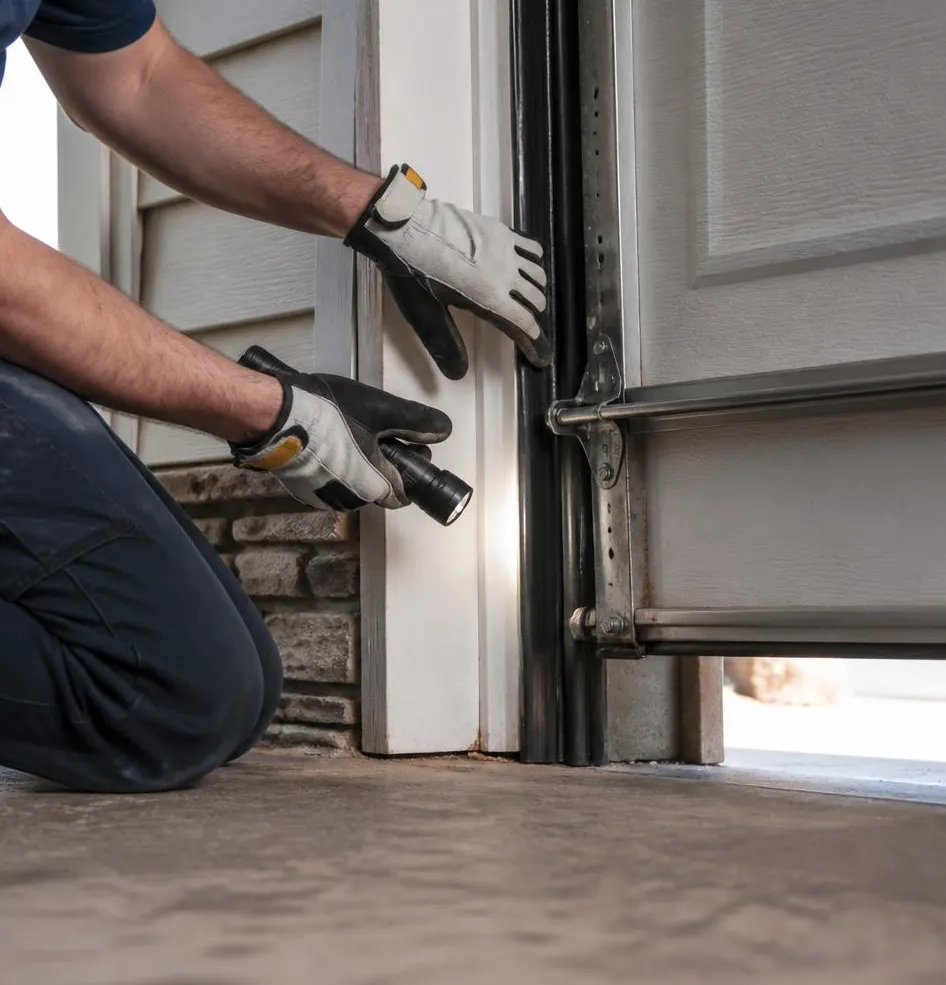
What We See on a Typical Fall Service Call
Most of our late-October calls start the same way: a homeowner notices water pooling along the bottom of the garage door, or the door suddenly feels heavier to lift than it did in August. After a long dry season, the rubber seal at the bottom has cracked and shrunk, dust has built up inside the tracks, and the springs are carrying months of wear from heat expansion. None of that shows up badly until the first real storm pushes water and cold air into the garage all at once. A little attention now saves an emergency call later.
Why This Transition Is Hard on Garage Doors
Concord and the surrounding East Bay go from a dry season with dust and wildfire smoke straight into winter rain, often with sharp day-to-night temperature swings. That shift stresses garage door components in a few specific ways: metal parts contract in cooler temperatures, rubber seals that baked all summer become brittle, and dust that settled into tracks and rollers turns into grime the moment it gets wet. Houses in this area also range from older builds with original hardware to homes with earthquake retrofits that added bracing to the garage opening — both benefit from a pre-winter check since retrofit brackets and original tracks don't always age at the same rate.
A Practical Pre-Winter Checklist
1. Replace or Inspect the Bottom Weatherstripping
Run your hand along the rubber seal at the base of the door. If it's cracked, flattened, or pulling away from the track, water will come in during winter rain instead of running off. Replacement seals are inexpensive and usually a straightforward swap, but make sure the new seal matches your track's channel width.
2. Clear and Lubricate the Tracks and Rollers
Months of dry-season dust collect in the tracks and on the rollers, and that grit grinds against the metal every time the door moves. Wipe the tracks clean with a damp cloth, then apply a silicone-based lubricant to the rollers, hinges, and springs. Avoid spraying lubricant directly into the opener's drive rail unless the manufacturer specifies it.
3. Test the Door's Balance
Disconnect the opener by pulling the release cord, then lift the door manually about halfway. It should stay in place on its own. If it drifts up or crashes down, the springs are out of balance — a sign they're wearing unevenly and may fail without warning once cold weather adds extra tension to the mechanism.
4. Check for Rust and Wood Rot
Inspect the bottom corners of wood doors and the edges of steel panels for rust spots or soft, swelling wood. These problem areas get worse fast once winter rain starts, especially on doors that face prevailing wind and moisture. Touch-up paint or a wood sealant now is far cheaper than a panel replacement in January.
5. Confirm the Opener's Safety Reverse and Backup Power
Place a block of wood on the ground where the door closes. If the door doesn't reverse on contact, the safety sensors need adjustment or replacement — not optional given how often storms knock out power and send kids and pets through the garage. If your opener has a battery backup, test it now; a dead backup battery is useless the first time a winter storm cuts power to the neighborhood.
6. Realign the Photo-Eye Sensors
Dust from the dry season often nudges these small sensors near the bottom of the tracks out of alignment. A door that reverses for no reason, or won't close at all, is usually a sensor lens that's dirty or slightly knocked off-center. Wipe the lenses and check that both sensors' indicator lights are solid, not blinking.
When to Call Concord Garage Door
If the balance test shows a spring problem, if you find rust eating into the track, or if the door is sticking, grinding, or reversing unpredictably, it's time to call in a technician rather than keep adjusting it yourself. Garage door springs under uneven tension can snap with real force, and that's not a repair to attempt solo. Our Garage Door Maintenance visits cover the full checklist above — lubrication, hardware tightening, balance and safety testing — and if we find a spring that's close to failing, our Spring Replacement service gets it swapped out before winter puts more strain on it. We also run Emergency Garage Door Service for anything that breaks mid-storm, because a door stuck open during winter rain isn't something that can wait.
If you're in Concord, Walnut Creek, Pleasant Hill, Martinez, Clayton, Pittsburg, Bay Point, or Pacheco and want your garage door checked before the rain sets in, give Concord Garage Door a call. We'll have a technician out to get it sorted before the next storm front moves through.